
ephesus experience museum
Ephesus Experience Museum is an immersive cultural attraction located at the entrance to the UNESCO World Heritage Site of Ephesus in Selçuk, Türkiye. Designed for an international audience ranging from cultural tourists to younger digital-native visitors, it extends the experience of the archaeological ruins through a choreographed journey combining projection, architecture, sound, lighting, scent, vibration and storytelling.
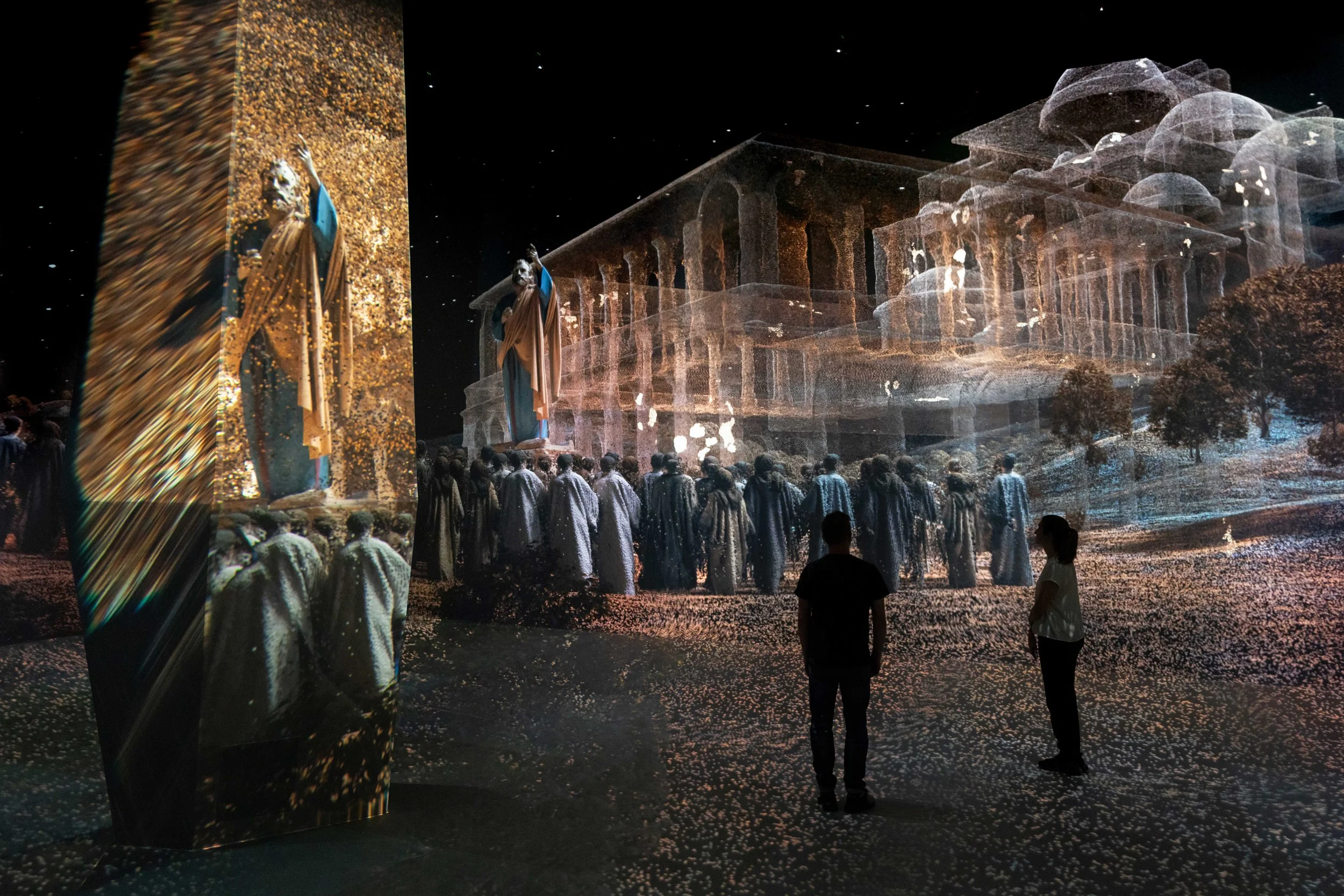
Visitors receive synchronised audio guides and headphones in one of 17 languages before entering three connected halls. In the first space, more than 30 ultra-short-throw projectors transform the walls, floor and ceiling into a continuous visual environment. Soundscapes, lighting and scent gradually move guests from the present into the atmosphere of the ancient city. The second hall expands the scale dramatically, with approximately 750 square metres of seamless projection surfaces and a 650-square-metre interactive floor powered by 90 synchronised projectors. Scenes inspired by Ephesus’s streets, rituals, architecture and everyday life unfold around visitors as they move freely through the space.
A central control system known as Pulse coordinates media playback, spatial audio, projection, scent, lighting and environmental effects in real time. During the earthquake sequence, vibration, sound and imagery work together to create a physical sense of instability, shifting the audience from observing the past to inhabiting it. The final hall changes the mood, presenting a monumental representation of Artemis through LED screens, immersive light and spatial sound. This quieter conclusion encourages reflection on Ephesus’s spiritual and cultural legacy.
The museum’s creative principle is that technology should disappear into the story. Despite using more than 120 projection devices and over 2,000 square metres of projected surfaces, the aim is not to showcase equipment but to make history accessible, emotional and memorable. The experience accommodates up to 200 visitors per session, while acoustic engineering prevents interference between spaces and preserves narrative continuity.
Its design also responds sensitively to the archaeological setting. Prefabricated construction avoided deep excavation and on-site concrete pouring, and the structure can be dismantled. The museum has increased engagement among younger visitors, encouraged longer dwell times and received multiple international awards, establishing it as a significant model for immersive heritage interpretation.